Combating Childhood and Adolescent Obesity
Lever
Culture of health in society
Grant type
Product development

Beneficiary population
Health teams, public managers, and students from public and private schools in Rio de Janeiro and Niterói

Childhood and adolescent obesity is a chronic and multifactorial condition, recognized by the World Health Organization (WHO) as a global health problem. In childhood and adolescence, the issue requires special attention, since habits formed during these stages tend to persist throughout life. Nutrition, access to information, Primary Health Care (PHC) capacity, the school environment, and regulatory policies directly influence both the progression and prevention of obesity. Data from the Food and Nutrition Surveillance System (Sisvan) of the Ministry of Health indicate that, in 2024, 31.3% of Brazilian children and adolescents between 0 and 19 years old were overweight. According to the World Obesity Atlas 2024, by 2035, half of Brazilian people aged 5 to 19 will have an elevated Body Mass Index (BMI), increasing the risk of early development of non-communicable diseases (NCDs), such as diabetes, hypertension, and cardiovascular diseases.
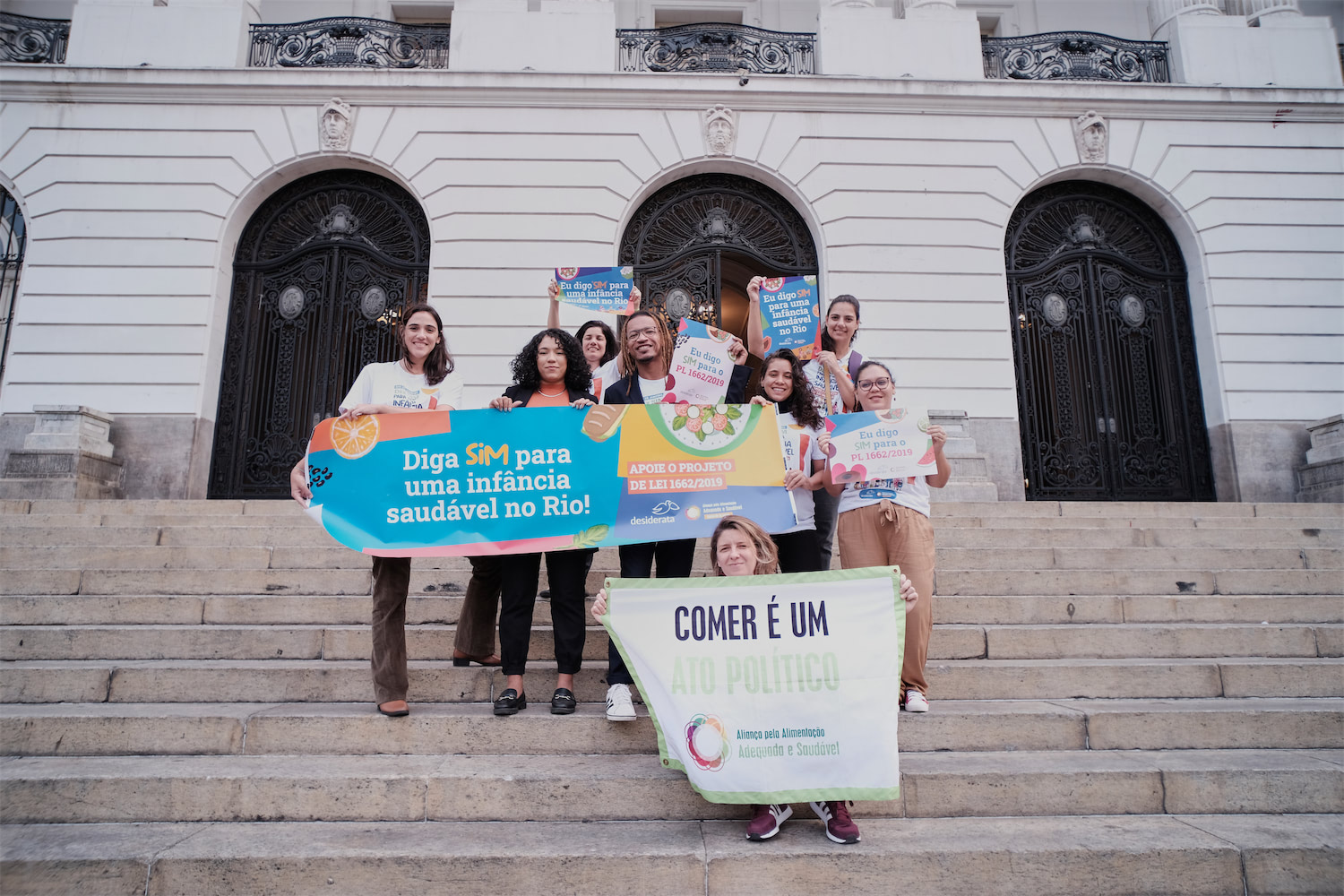
Faced with this scenario, the project Tackling Childhood and Adolescent Obesity, developed by the Desiderata Institute with support from Umane between 2020 and 2025, consolidated an integrated and long-term approach. The initiative combined training for PHC professionals, the implementation of a specific line of care, data production and dissemination, communication, advocacy, and social mobilization.
The project began in the state of Rio de Janeiro, initially in the capital, and reached Niterói in 2022, where a line of care for the prevention and management of childhood and adolescent obesity was developed and subsequently expanded to the entire municipal health network. Between 2022 and 2025, more than 850 professionals were trained on the subject. During the same period, the online course *Prevention and Care Related to Childhood and Adolescent Obesity* registered 851 updates/enrollments, with participants from 16 states and the Federal District.
Political advocacy actions also yielded concrete results. In Rio de Janeiro, Law No. 7,987/2023 banned the offering of ultra-processed foods in schools. In Niterói, Law No. 3,776/2023 expanded restrictions on the marketing and advertising of products associated with childhood and adolescent obesity, including ultra-processed foods. In 2024, Decree No. 15,457 regulated the municipal legislation and established enforcement measures. An impact evaluation conducted by a specialized partner of Umane analyzed the project’s results in Niterói. The study indicated an increase in records regarding the nutritional status of individuals aged 0 to 19 in Sisvan and growth in referrals of childhood and adolescent obesity cases to specialized services. In the fourth quarter of 2024, Niterói recorded 18,000 registrations in Sisvan, compared to 7.5 thousand in the synthetic municipality used for comparison. In the same period, 29% of children and adolescents with obesity treated in the network were referred to specialized services, compared to 7% in the synthetic municipality.
In 2025, the partnership also supported knowledge production and communication. Highlights include the *Practical Guide for a Healthy Cafeteria II*, developed with the Federal University of Minas Gerais (UFMG) and the Federal University of Rio de Janeiro (UFRJ); the study *Impacts of Childhood and Adolescent Obesity in Brazil*; the factsheet *What the Eyes See*; and the third edition of the *Overview of Obesity in Children and Adolescents*. The publications are available on the *Childhood Obesity in Focus* portal.
Development of healthier habits among children and adolescents and the implementation of actions that include care pathways, professional training, regulatory measures, data collection, and knowledge dissemination.
visits to the Childhood Obesity in Focus portal in 2025.
visits to the Overview of Obesity in Children and Adolescents portal in 2025.
enrolled in the distance learning (EAD) training on childhood and adolescent obesity.
mentions of the Desiderata Institute in the media, including two TV reports on Jornal da Record and Jornal Hoje (TV Globo).

“The financial and technical support from Umane since 2020 has allowed us to expand the project’s actions, strengthen the team, and achieve significant results in strategic areas such as advocacy, structuring the care pathway in Niterói, training health professionals, and communication—promoting concrete advancements in the public and political debate.”