
Observatory of Brazil’s Health Ecosystem
Lever
Use of data, telehealth and new technologies
Type of grant
Applied Public Health Research

Benefited population
The entire Brazilian population

The Brazil Health Ecosystem Observatory (OESB) is an initiative carried out by the Institute for Health Policy Studies (IEPS) and fostered by Umane, with support from the National Institute for Health and Care Research (NIHR) of the United Kingdom. Launched in 2025, the OESB aims to strengthen the Unified Health System (SUS) and broaden the understanding of the relationships between the public and private health sectors.
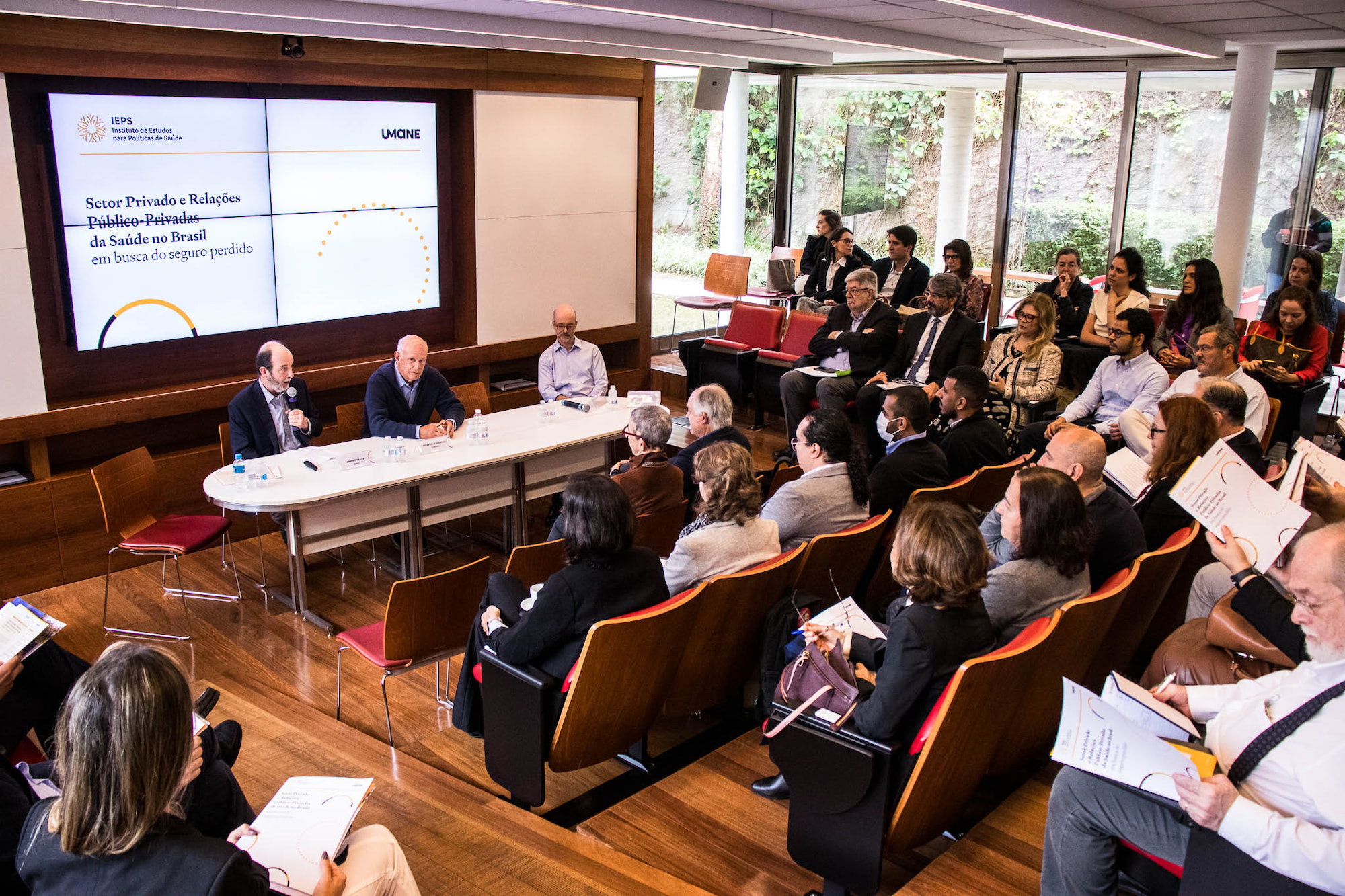
The initiative is an outgrowth of the study **Private Sector and Public-Private Health Relations in Brazil: In Search of Lost Insurance**, published in 2024. The survey analyzed recent trends in the Brazilian healthcare system, service providers, health insurance and plans, financing, human resources, philanthropic entities, Social Health Organizations (OSS), the presence of foreign capital, and forms of interaction between supply and demand in the public and private sectors.
The OESB seeks to fill evidence gaps regarding how these spheres share professionals, equipment, services, and other production factors. To achieve this, it brings together studies, technical articles, news, and compiled data, supporting researchers, public managers, communication professionals, and anyone else interested in the subject.
By consolidating qualified information on the Brazilian health ecosystem, the platform contributes to the monitoring, evaluation, and formulation of public policies that take into account the interdependencies between sectors. The initiative reinforces the importance of strengthening SUS funding, improving the regulation of the private sector and public-private partnerships, and consolidating robust, state-led governance to guarantee the universal right to health in Brazil.
Presentation of data and proposals to address challenges in key aspects of public–private relations in Brazil and their impacts on the Unified Health System (SUS).
actors, representing the health system, participated in the study’s launch seminar.
instances of advocacy/engagement with representatives of the federal executive and legislative branches, SUS councils, and regulatory agencies, alongside coordination with other strategic actors.
participations in congresses and other events.
views of the episode “Private health, public symptoms” from the CALMA, URGENTE! podcast, which discussed the study.

“In collaboration with Umane, we promoted valuable spaces for debate and reflection, which resulted in a robust survey of more than 400 pages with unprecedented data on the private health sector and its relations with the public sector. It is based on data, scientific evidence, and dialogue between researchers and public authorities that it will be possible to address the issues impacting the Brazilian health system. This project is a contribution to strengthening the debate and paving the best way to guarantee protection and health insurance mechanisms for the entire population.”