





Lever
Use of data, telehealth and new technologies
Grant type
Model Development
Beneficiary population
Residents of the nine capital cities of the Northeast region.
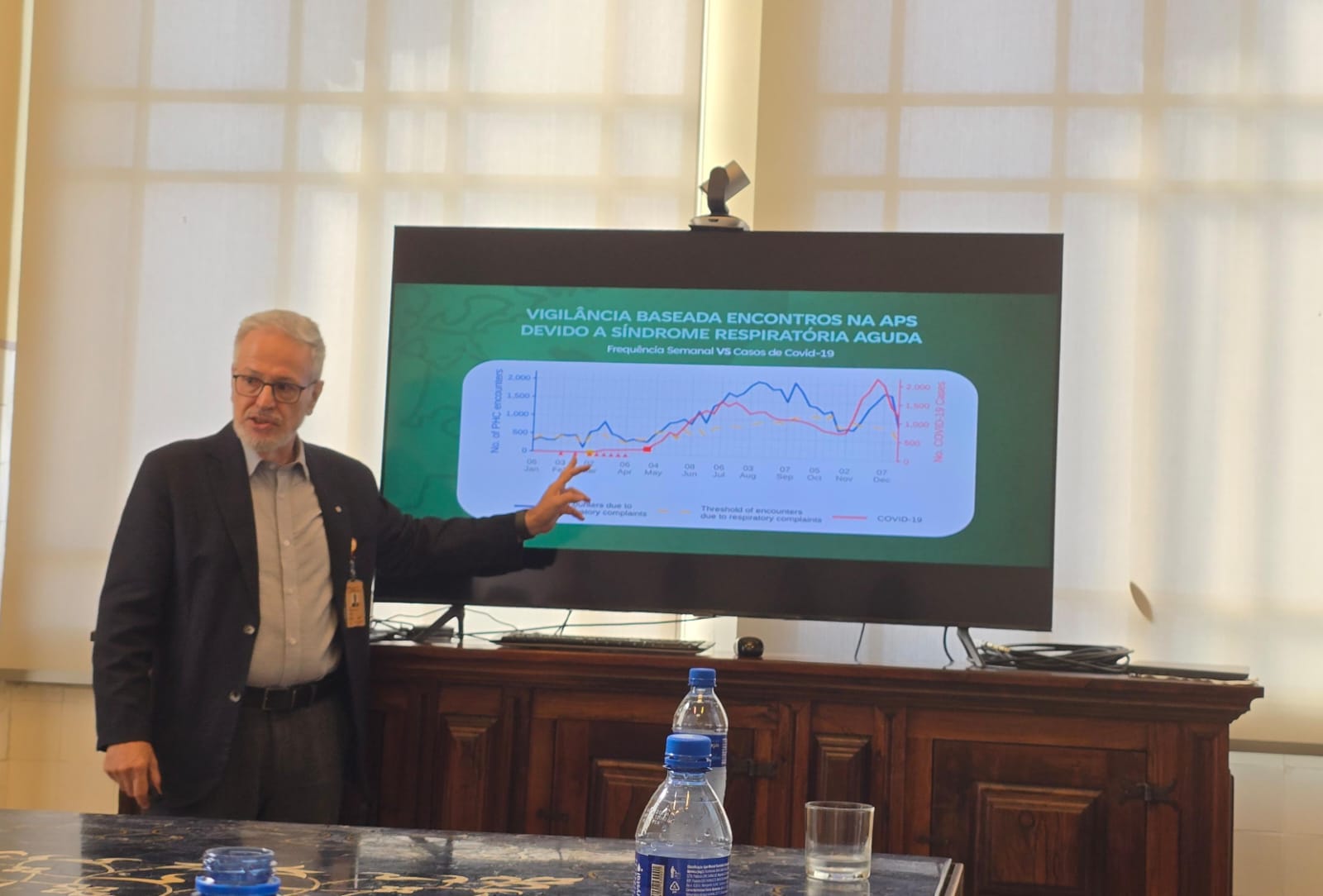
Developed by the Oswaldo Cruz Foundation (Fiocruz), with support from the Molecular Biology Institute of Paraná (IBMP), the *Sistema de Antecipação de Surtos* – AESOP (Outbreak Anticipation System) uses artificial intelligence to identify respiratory syndrome outbreaks early and support faster, more targeted healthcare system responses.
The platform analyzes Primary Health Care (PHC) data and complementary information—such as over-the-counter medication sales and socioeconomic and bioclimatic indicators—to generate geographically localized alerts. The solution strengthens health surveillance and enables the mapping of areas with a higher risk of outbreak dissemination.
In 2025, anomaly detection algorithms for PHC appointments were developed and validated. The system was also made available to teams from the Ministry of Health’s Secretariat of Health and Environmental Surveillance, as well as the state and municipal Health Secretariats of Amazonas and Bahia. By the end of the year, AESOP was already issuing weekly alerts to 2,243 municipalities in the North and Northeast regions.
progress in the development of the Real-Time Monitoring System and anomaly detection algorithms (based on PHC data, medication sales and machine learning models)
levels of management gained access to the system: the Ministry of Health, state health departments, and municipal health departments.
No. Umane’s operations and governance are entirely independent.
Since the full sale of Hospital Samaritano’s assets in 2016, Umane has had no relationship or direct partnership with the hospital, nor does it receive funds from third parties or any other institution.
Umane and its philanthropic activities are funded exclusively by the annual returns generated by its endowment fund, which was established using the full proceeds from the sale of Hospital Samaritano’s assets.
The fund’s returns ensure the organization’s long-term sustainability, preserve its patrimony, and support its social mission. Umane does not receive external funding.
Umane is an independent, nonprofit civil association certified by the Ministry of Health. Its social objectives focus on philanthropic initiatives that strengthen the public health system, improve the quality of life of people living in Brazil, and align with its three programmatic areas:
Comprehensive Care for Noncommunicable Chronic Diseases (NCDs) Program:
Initiatives addressing modifiable risk factors (such as smoking, physical inactivity, alcohol consumption, and inadequate nutrition), screening, increased access to care and diagnosis, and the management and monitoring of NCDs within Primary Health Care.
Primary Health Care Strengthening (PHC) Program:
Initiatives aimed at operational improvements, work processes, team productivity, service integration, institutional capacity-building in public health, and the adoption of data, new solutions, and emerging technologies — with Primary Health Care as the coordinating axis of the health system.
Women’s, Children’s and Adolescents’ Health Program:
Initiatives that monitor pregnancy to assess risks and prevent adverse outcomes, and that support the prevention, management, and monitoring of children’s and adolescents’ health conditions related to NCDs and their modifiable risk factors.
No. Umane does not require any form of compensation from supported institutions, except for the agreed-upon deliverables necessary for the execution of the project’s work plan and achievement of expected results.
Support is granted exclusively to projects that meet Umane’s criteria and indicators and that align with its programmatic focus on improving public health.
Yes. Umane forms partnerships with public administration through instruments such as Technical Cooperation Agreements without financial transfers.
These partnerships exist solely to pursue the social objectives stated in its Bylaws. Umane does not receive or transfer public funds — 100% of its resources come from its private endowment fund.
Umane’s governance consists of:
A body of Associates: The institution’s sovereign body, which meets annually in a General Assembly.
A Board of Directors: The organization’s senior deliberative body, composed of members recognized in their respective fields.
An Executive Board: Responsible for day-to-day management and legal representation of the organization.
Technical committees supporting the Board of Directors:
Finance and Investment Committee
Philanthropy Committee
Compliance, Governance, Audit, and Ethics Committee
Nominating Committee
No. Umane does not provide remuneration, profit distribution, bonuses, or benefits of any kind — directly or indirectly — to associates, board members, directors, or committee members for the roles and responsibilities established in its Bylaws.
No. Umane is a nonpartisan institution and does not favor any political orientation.
The principles of independence and nonpartisanship guide its actions, and the organization is prohibited from engaging in political-party or electoral campaigns.
Umane operates through a model of local implementing partners, working with organizations that share the mission of promoting health promotion and prevention actions. It does not provide donations outside its programmatic areas or directly to individuals.
Project support is usually carried out through donations made directly to implementing partners or through contracts with private service providers. All proposals are evaluated based on an institutional guideline process.
If you still have questions, contact us at contato@umane.org.br.
Umane supports projects from civil society organizations and/or nonprofit institutions whose goal is to positively impact public health, according to its three programmatic areas:
• Comprehensive Care for Noncommunicable Chronic Diseases (NCDs) Program: initiatives aimed at controlling modifiable risk factors (such as smoking, physical inactivity, alcohol consumption, and unhealthy diet), screening, increasing access to health and diagnosis, and managing NCDs in Primary Health Care;
• Primary Health Care Strengthening (PHC) Program: initiatives that promote operational improvements, work process organization, team productivity, service integration, institutional capacity-building in public health, and the incorporation of data use and new technologies into the system, with PHC as the coordinator of care;
• Fostering Women’s, Children’s and Adolescents’ Health Program: initiatives that monitor pregnancy, assess and prevent risks, and promote prevention, management, and monitoring of health conditions in children and adolescents within the context of NCDs and their modifiable risk factors.
Umane does not fund:
Projects that do not fall within its programmatic areas (NCDs, PHC strengthening, and women’s/children’s/adolescents’ health);
Projects aimed at hospital care or exclusively assistential approaches;
Projects from individuals;
Events or task forces.
Additionally, Umane does not transfer or receive financial resources from the public sector or government institutions.
Umane selects projects through calls for proposals, qualified prospecting, active search, referrals, or spontaneous interest from potential partners.
The submission phases vary depending on the project type and scope.
Call for Proposals: follows predefined criteria described in the call itself.
Qualified prospecting, active search, referral, or spontaneous demand:
After initial contact, the proposing organization sends the requested information. Meetings are held for presentation and clarification. If the project aligns with Umane’s strategy, the proponent receives the standard documentation for completion.
A logical framework of indicators is then jointly developed, and the project is presented to the Philanthropy Committee.
With the committee’s recommendation, the proposal is sent to the Executive Board and the Board of Directors. After approval, conditions are agreed upon, the contract is signed, and support begins.
Approval can take 3 to 12 months, depending on:
Accuracy and completeness of the required documents;
Technical maturity of the proposal;
Operational feasibility;
External factors such as negotiations with the public sector;
Participation of cofunders;
Maturity of the proponent in project management.
Umane commonly uses Donation Agreements with Obligations, though other formats may also be applied. These contracts are established with implementing organizations and ensure donated resources are used efficiently and aligned with Umane’s guidelines.
Evaluation is carried out through a logical evaluation framework jointly developed between the proponent and the Monitoring & Evaluation team.
This framework outlines the sequence of outputs and outcomes and includes specific indicators to track progress, measured through monitoring data and, when necessary, additional data collection.
Generally, Umane does not recommend resubmitting a rejected proposal. The institution’s decisions are conclusive and ensure resources are directed to aligned projects.
However, proponents may submit new and different proposals in the future.
Umane does not release full documentation of supported projects.
However, by reading this FAQ, exploring the “How We Work – Operating Model” section, and reviewing the supported projects, you can better understand Umane’s criteria and processes.
The duration varies according to expected objectives and outcomes and may last from a few months to several years.
Umane supports initiatives throughout the entire Brazilian territory.
Umane values transparency and positions itself as an organization accountable for its actions, operating in accordance with its compliance program and Brazilian legislation. For this reason, it maintains an anonymous channel for questions and reports, open for use by anyone.
This Policy serves as a guide for Associação Umane on how to engage with industry and with third parties directly connected to such industries—whose products are known to harm health or whose activities have the potential to damage Umane’s reputation, particularly those related to noncommunicable diseases and their determinants (e.g., the tobacco, alcohol, sugary beverage, and ultra-processed food industries).
The provisions set forth in the Code of Ethical Conduct constitute an essential set of ethical principles and guidelines advocated by Associação Umane in its relationship with internal* and external** stakeholders who participate in or contribute to the Association’s activities.
* Internal stakeholders: members, board members, directors, governance members or invitees, and employees.
**External stakeholders: suppliers, service providers, project participants, partners, public agents, and other related parties.
This Code applies to all participants in social projects supported by Associação Umane and to third parties directly or indirectly connected to the projects. It complements the Ethical Conduct Code with guidelines specifically directed at project participants. This Code defines the minimum formal requirements and the ethical principles that guide participant relationships within the scope of projects supported by Umane.
This Policy sets forth the principles and guidelines for preventing conflicts of interest involving Umane’s internal* and external** stakeholders.
Internal stakeholders: members, board members, directors, governance members or invitees, and employees.
External stakeholders: suppliers, service providers, project participants, partners, public agents, and other related parties.