
More Data More Health
Lever
Use of data, telehealth and new technologies
Grant type
Applied Public Health Research

Beneficiary population
All people living in Brazil



The Mais Dados Mais Saúde (More Data, More Health) is an innovation program in public health data collection, carried out by Umane and Vital Strategies, with technical partnership from the Federal University of Pelotas (UFPel) and support from the Devive Institute. The program also counts on specific partners in its modules: Resolve to Save Lives supported the study on Primary Health Care (PHC), and the Ministry of Racial Equality (MIR) was the government partner in the module on everyday discrimination.
The program is based on the premise that deeply understanding the challenges faced by the population is an essential step toward strengthening more equitable and effective public policies. In a country marked by social, racial, territorial, and environmental inequalities, producing evidence that considers the plurality of the various “Brazils” contributes to qualifying public debate, supporting monitoring, and guiding decisions in public health.
Previously called Covitel, *Mais Dados Mais Saúde* stems from the experience of two editions of the telephone survey, conducted in 2022 and 2023, focusing on chronic non-communicable diseases and their risk factors. In the current cycle, the program adopted a new methodological approach, with 100% digital collection. The shift expanded the territorial reach of the surveys, made data processing faster, and created conditions to address sensitive and emerging topics, always from a data-driven and equity-oriented perspective.
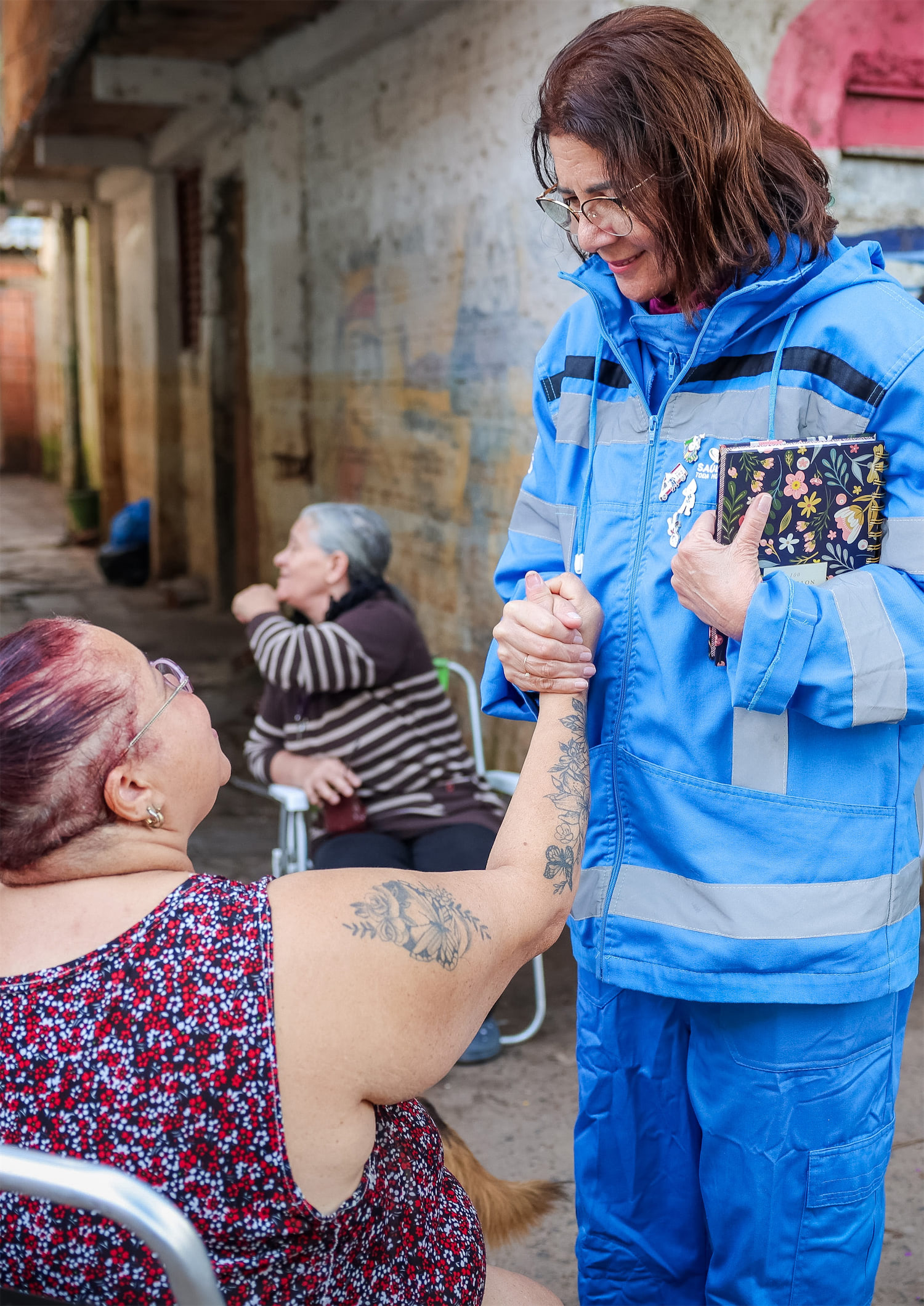
In 2025, the program launched three modules. The first investigated the user experience in Primary Health Care (PHC), focusing on access to services and quality of care. The second applied, for the first time in Brazil in an integral manner and with national coverage, the Everyday Discrimination Scale, an internationally validated tool to measure daily experiences of discrimination. The third, Climate and Health in the Legal Amazon, analyzed the relationship between climate change, nutrition, mental health, chronic diseases, and risk factors, with special attention to traditional peoples and communities.
By testing digital collection methodologies and incorporating topics rarely explored in national surveys, *Mais Dados Mais Saúde* contributes to expanding the production of evidence in public health. The survey results are available on the Public Health Observatory, a Umane platform, reinforcing the initiative’s commitment to transparency, qualified access to information, and the strategic use of data to strengthen public policies in Brazil.
Strengthening more equitable and effective public health policies through the generation of data that support decision-making in public management.
people in the country between August and September 2024 responded via online questionnaires, which formed the basis for the first two modules
of respondents sought medical help in the last 12 months and were unable to receive care
of Brazilians who identify as Black have already experienced some form of racial discrimination
of Black women stated they had faced discriminatory episodes motivated by more than one factor, such as race, gender, physical appearance, and social class
residents of the Legal Amazon were interviewed between May and July 2025
of respondents said they already feel directly affected by climate change
of interviewees belonging to traditional peoples and communities said they were concerned about food shortages associated with drought and flood cycles

“This new methodology, in addition to aligning Brazilian practices with other international efforts underway, will be essential for analyzing key public health issues in shorter time frames, such as in epidemic situations, providing valuable inputs for decision-making and for the creation and strengthening of public policies.”